- 19.02.2026

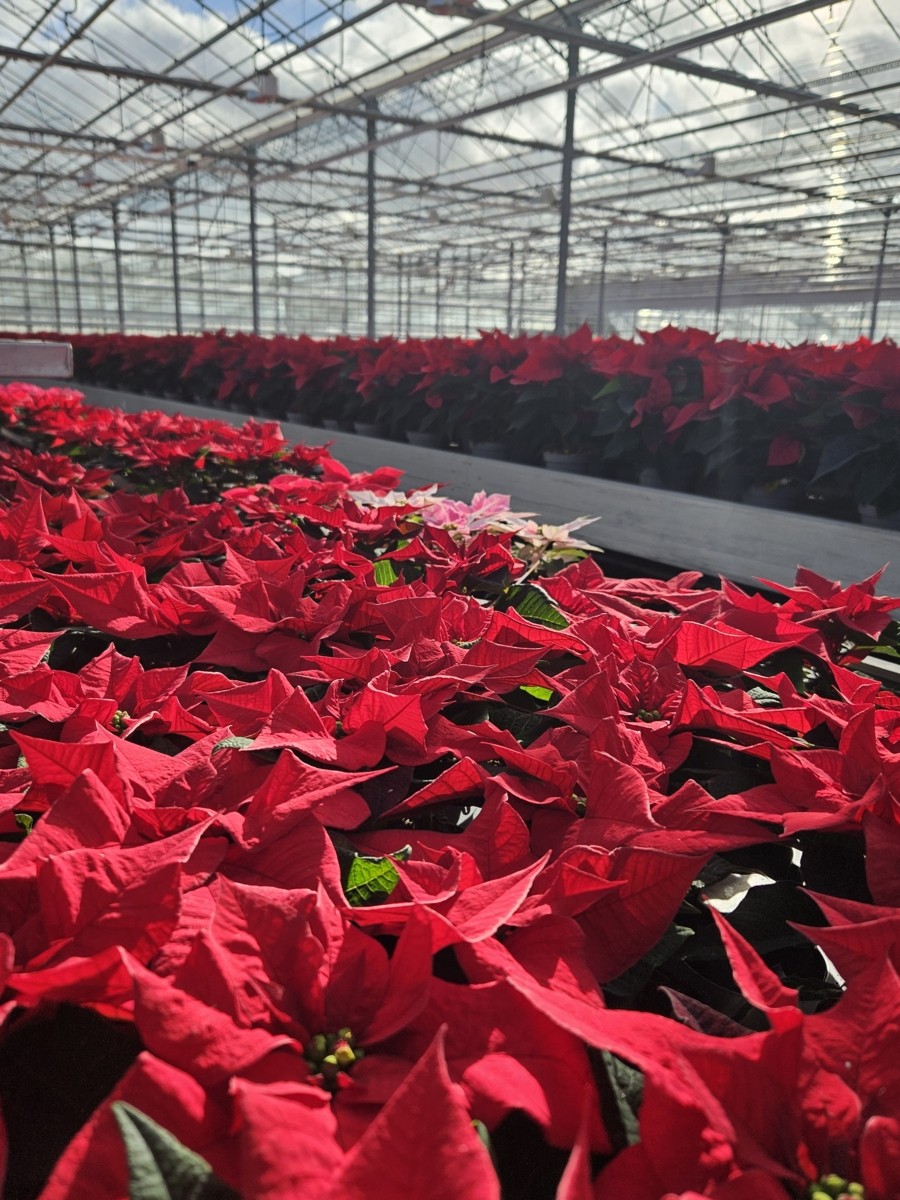
Stars for Europe (SfE) and Pelargonium for Europe (PfE) are continuing their series of technical columns to support European producers, which kicked-off last year. Click here to read the last column about peat for poinsettias by UK expert Neil Bragg.
This initiative promotes sustainability in ornamental horticulture through articles collating the opinions of experts across Europe, sharing first-hand insights from their regions. While local challenges may vary, the goal is to foster international exchange.
This edition presents an overview of the latest findings by scientists researching sustainability in horticulture in three key markets:
- From Hungary, Prof. Dr. János Bálint focuses on sustainable cultivation techniques in Eastern Europe. He discusses the benefits of precision fertilization, reducing chemical inputs, and integrating biological pest control methods – all while maintaining crop quality and improving environmental outcomes.
- From Germany, Prof. Dr. Paul Lampert highlights how regional value chains, renewable energy use, and peat-free substrates significantly reduce the carbon footprint of ornamental crops. He emphasizes the role of research and practical innovation in making German horticulture more sustainable.
- From Germany, Prof. Dr. Paul Lampert highlights how regional value chains, renewable energy use, and peat-free substrates significantly reduce the carbon footprint of ornamental crops. He emphasizes the role of research and practical innovation in making German horticulture more sustainable.
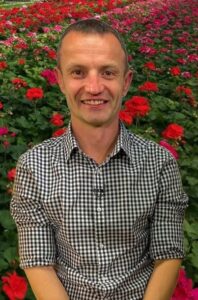
Prof. Dr. János Bálint – Sapientia Hungarian University of Transylvania, Department of Horticulture
Location: Hungary
Achieving sustainability in ornamental horticulture presents both a significant challenge and a valuable opportunity to enhance the cultivation of crops like pelargoniums and poinsettias. These widely cultivated plants often require fertilizers, plant growth regulators (PGRs), and plant protection products. However, recent advances in cultivation techniques clearly demonstrate that more sustainable approaches are achievable without compromising crop quality.
A key factor is selecting the right cultivars and tailoring cultivation techniques to the specific needs of each variety. In many cases, with appropriate variety choices and optimized growing conditions, the use of PGRs can be avoided altogether. This reduces chemical inputs, making production both environmentally safer and more cost-effective.
Another important aspect is the adoption of precision fertilization. In a number of greenhouses, professional nutrient management has enabled growers to cut fertilizer use by at least 30 % compared to conventional methods. This not only lowers production costs but also reduces nutrient runoff and environmental impact.
Plant protection offers further opportunities for sustainability. By developing preventive protection strategies, training growers, and closely monitoring pests, there have been cases where horticultural operations have reduced pesticide use by more than 50%. This was achieved by applying products selected based on resistance testing of current pest populations, thus ensuring better long-term control. Moreover, the introduction of beneficial organisms—common in vegetable production—has yielded positive results in ornamental crops as well. Specifically, the parasitic wasp Encarsia formosa is used against whitefly in poinsettia, Orius predatory bugs combat thrips in ivy geraniums, and Trichoderma, a beneficial fungus, helps control soil-borne pathogens such as Fusarium and Pythium.
These examples show that growers have the capacity to adopt more sustainable production systems, with encouraging partial successes already underway. For consumers, this means pelargoniums and poinsettias can increasingly be enjoyed with confidence, knowing that environmentally responsible practices are gradually shaping modern plant cultivation.
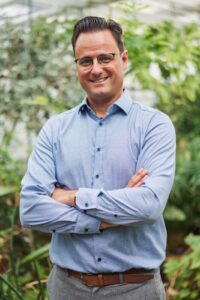
Prof. Dr. Paul Lampert – Cultural and Operating Systems in Sustainable Crop Production, University of Applied Sciences Erfurt
Location: Germany
Sustainability in horticulture is not just a research topic, but a key concern for the future of the industry. Popular crops such as poinsettias and pelargoniums in particular demonstrate how closely ecological responsibility is linked to regional production and innovative cultivation systems.
Numerous projects have shown that the carbon footprint of ornamental plants can be significantly improved if value chains are consistently designed with a regional focus, without neglecting the international perspective (e.g. off-shore cutting productions). Short transport routes and, in particular, the use of renewable energies in greenhouses significantly reduce emissions – while also strengthening regional horticultural businesses.
Another major area of action is the reduction of peat in substrates. Studies show that partial or even complete substitution of peat with renewable raw materials is not only ecologically sensible, but in many cases can also be economically viable.
For example, the CO₂ footprint of poinsettia production was reduced by over 20% through the use of peat-free substrates, while the economic impact remained comparatively low.
Projects such as ToPGa show that practical peat substitutes can be developed and successfully used. ToPGa was a three-year research project which evaluated substrate compositions in economic and ecological terms. It found that while full peat replacement is possible for some crops, for others it is not yet economically viable; impacts also depend heavily on greenhouse energy sources and packaging. The study further showed that microbial activity in substrates strongly influences pest attraction, with bark humus and green compost being far more attractive to fungus gnats than white peat or sphagnum, underlining the complexity of balancing agronomic, economic, and ecological factors.
These results clearly show that German horticulture is working hard to become more sustainable – with scientifically sound concepts and a strong practical focus.
For consumers, this means that poinsettias and pelargoniums can be enjoyed with a clear conscience, knowing that plant production is becoming more environmentally friendly and sustainable.
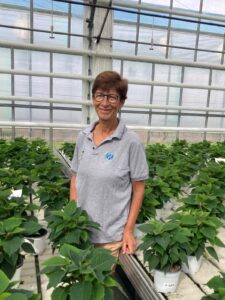
Giovanna Pavarin – Floricultural technician, Horticultural Experimental Centre Po di Tramontana, Veneto Agricoltura
Location: Italy
Here at the Horticultural Experimental Centre Po di Tramontana, every year, we carry out poinsettia variety trials. The aim is not only to describe agronomic and ornamental aspects of the varieties, but also to indicate which are less exigent in terms of critical inputs, such as heating, water, growth regulators and more generally in chemicals.
We have researched biological control for the most important poinsettia pests, with very good results. That means it is becoming possible to produce healthy plants with a very reduced number of biological control treatments, and we expect in many years, with none.
Additionally, for three years we have been carrying out trials with peat free substrate in poinsettia. These have revealed both positive and negative aspects of using these new materials – we are looking at ways to correct the issues while maintaining the focus on environmental sustainability.
Veneto Agricoltura is a public Institution that supports the Veneto Region and Italian growers in their technical choices, with particular focus on environmental sustainability. One of its facilities of Veneto Agricoltura is the Horticultural Experimental Centre Po di Tramontana, in Northern Italy.
Reproduction is free of charge, please credit ‘Pelargonium for Europe (PfE) and Stars for Europe (SfE)’. Please send a copy. Trade professionals can find more information about PfE at www.pfe-trade.com and about SfE at www.sfe-trade.com.